Hyperreal

Fields
EDITORIAL DESIGN
course
GRAPHIC DESIGN
year
2026
Project overview
In an age where artificial intelligence, misinformation, and digital manipulation continuously reshape our perception, the boundary between reality and fiction has become increasingly blurred. This editorial project explores the hypothesis that reality itself may be a simulation, investigating the fragile relationship between the natural and the artificial. Through visual research, cultural references, and speculative narratives, the project invites the reader to question what is authentic, what is constructed, and whether the distinction between the two still exists.
Throughout the publication, two voices coexist: a human narrator and the simulation itself. As the story unfolds, the human voice gradually becomes fragmented, uncertain, and increasingly unreliable, reflecting the loss of certainty in a world where reality can no longer be verified.
Research
The project is rooted in interdisciplinary research spanning philosophy, cinema, literature, contemporary art, technology, and digital culture. By connecting references from different fields, it investigates how the idea of simulation has evolved over time, from ancient theories of perception to today's AI-generated realities. This network of references forms the conceptual foundation of the publication.


Design approach
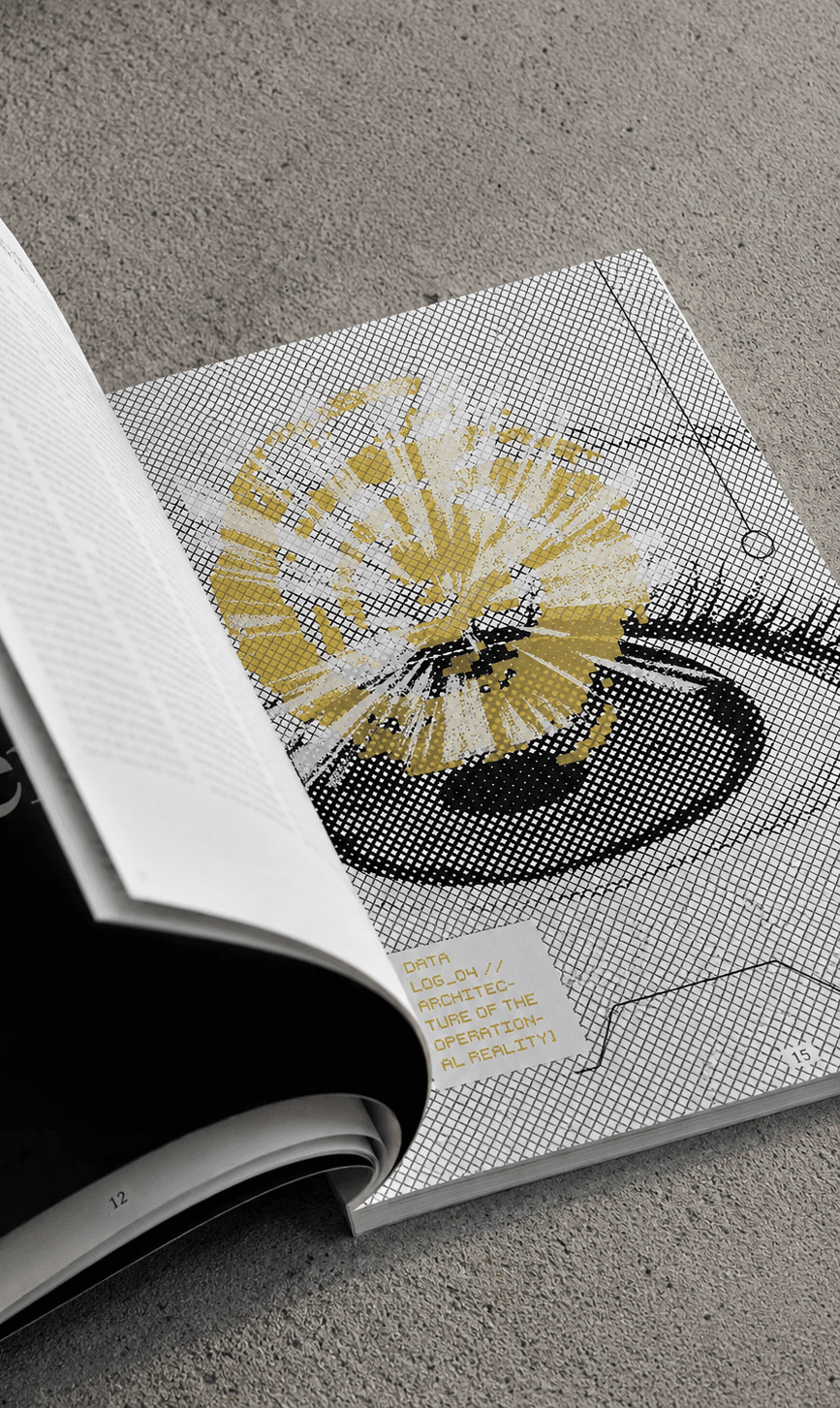
The visual identity is based on contrast. Organic forms coexist with geometric structures, natural imagery meets synthetic compositions, and clean editorial layouts are interrupted by moments of controlled disruption. This balance reflects the ongoing tension between the physical and the digital.

The layout is built around a structured grid that acts as the invisible framework of the publication. Rather than being followed rigidly, the grid is progressively challenged throughout the book: elements shift, overlap, expand, or move outside their expected position. The structure remains present underneath, but its visual interpretation becomes increasingly unstable as the narrative develops.
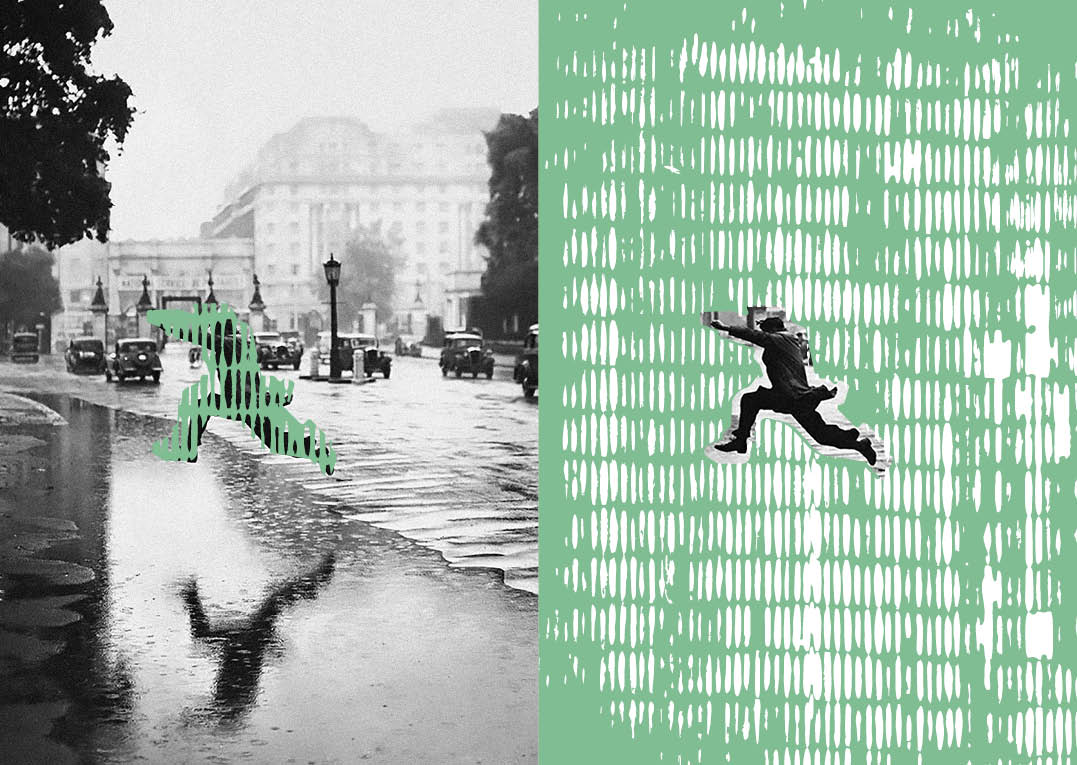
Images are treated as part of the narrative rather than as simple illustrations. Scale, cropping, repetition, juxtaposition, and sequencing are used to create relationships between apparently unrelated subjects. Natural and technological imagery coexist throughout the publication, encouraging the reader to search for connections and question whether what is presented belongs to the organic, the artificial, or somewhere in between.

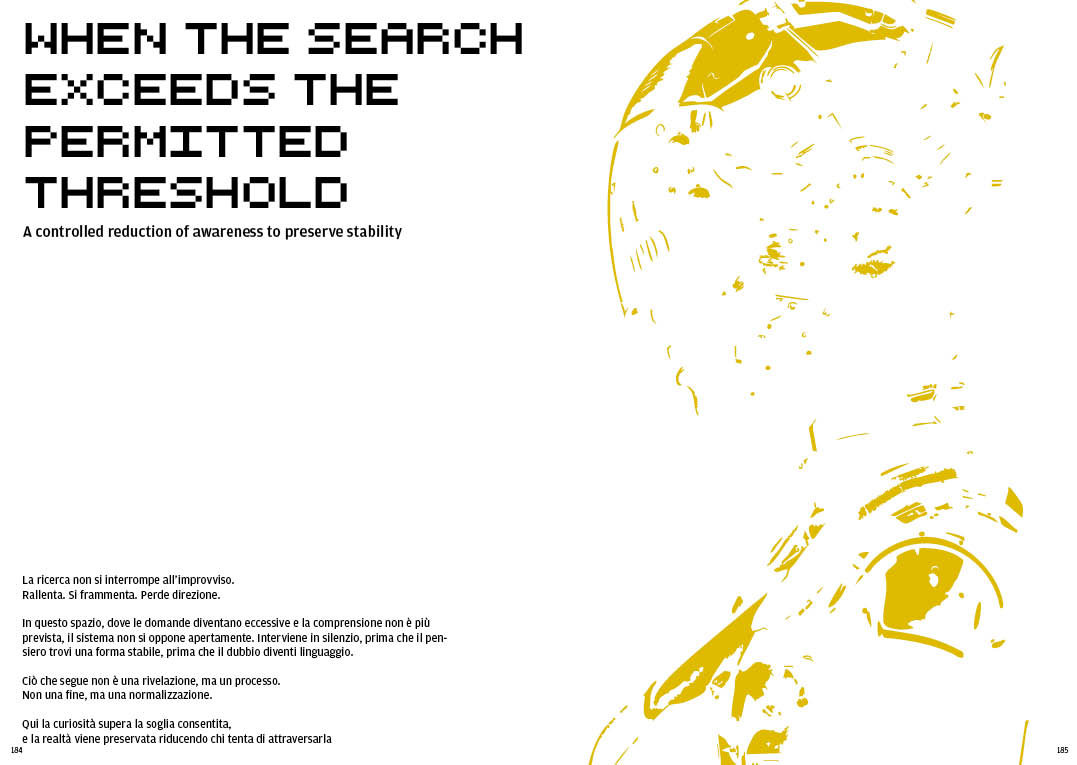
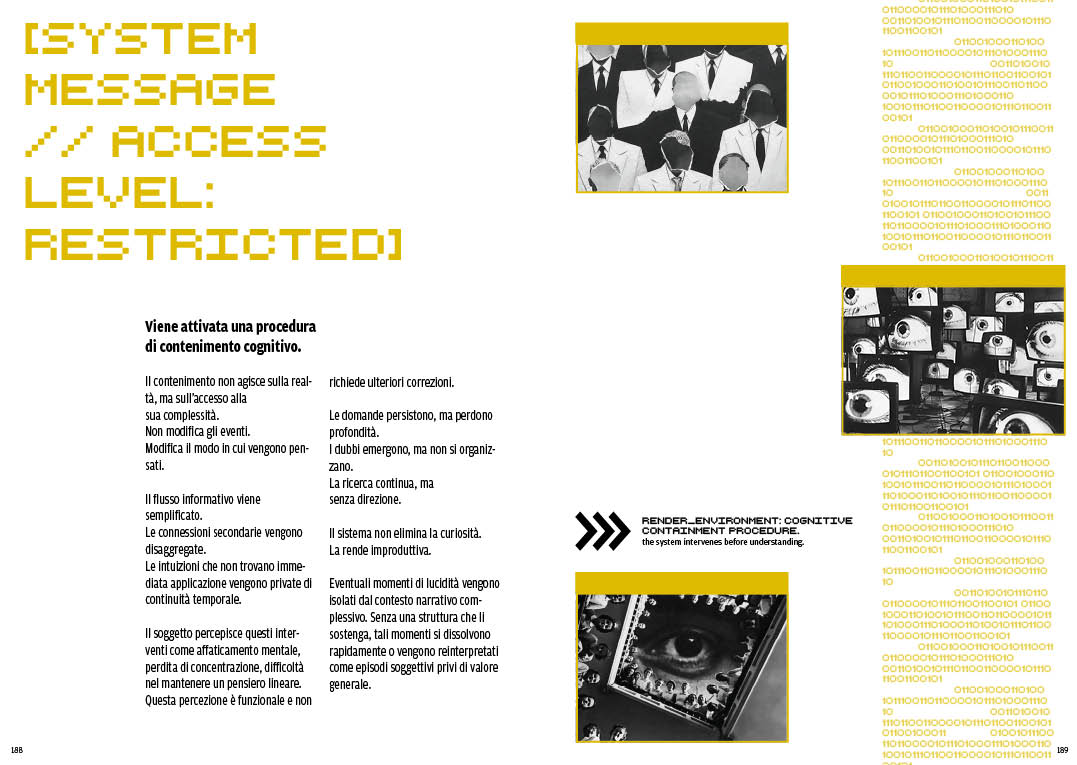
The System represents order, logic, and control. Its visual identity remains consistent throughout the entire publication: typography, size, alignment, spacing, and positioning follow a fixed set of rules. Its language is concise and precise, often resembling commands, status messages, data, or system notifications. Regardless of what happens within the narrative, the System never visually deteriorates. It remains stable.
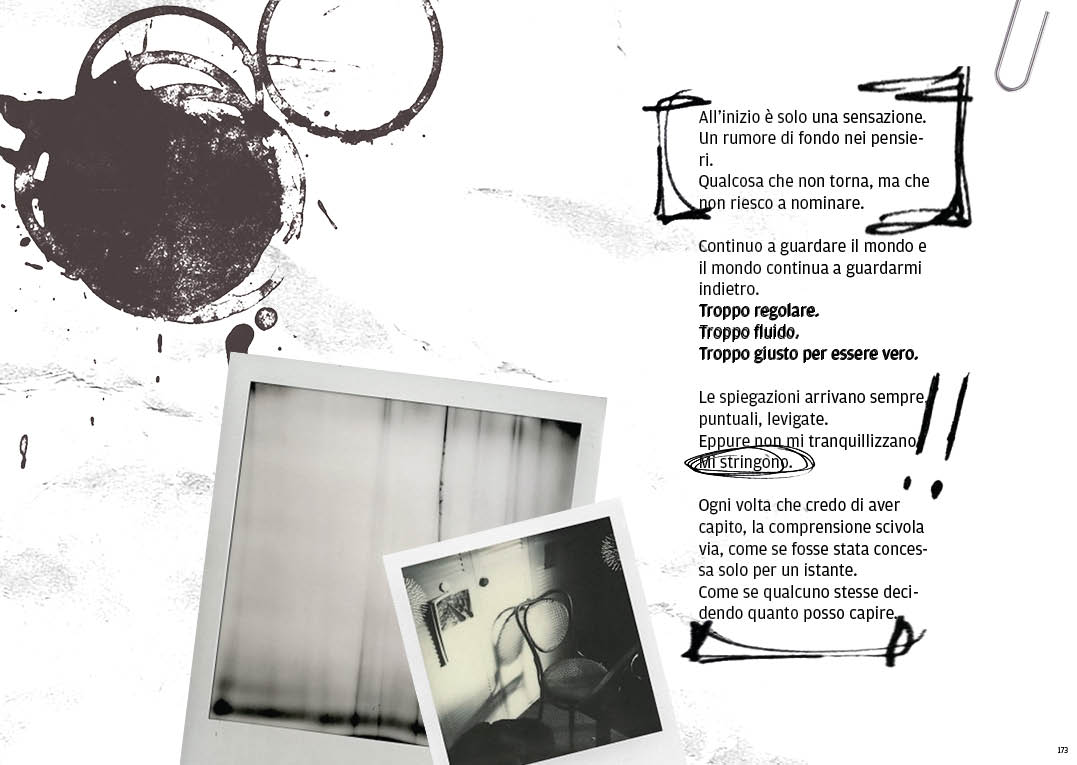
The Human, in contrast, is defined by instability. At the beginning of the publication, the human voice appears controlled and readable, following a structure similar to that of the System. As the narrative progresses, however, these rules gradually begin to collapse. Typography changes in scale and position, sentences become fragmented, spacing becomes irregular, text overlaps or disappears, and the relationship with the grid becomes increasingly unpredictable.